
Pay Equity
Scarica la checklist beqom di conformità alla Direttiva UE sulla trasparenza salariale
Il termine per la Direttiva UE sulla trasparenza retributiva è scaduto. Scopri a che punto si trova la tua azienda e cosa correggere subito.
Quanto è conforme la tua azienda alla Direttiva UE sulla trasparenza retributiva? Completa la nostra checklist per scoprirlo.
Estonia has partially implemented the EU Pay Transparency Directive under a unique split strategy. Legislation covering the pay transparency components of the EUPTD took effect on July 13th, 2026. The Estonian government has been seeking to postpone Legislation regarding pay gap reporting, pay structures, and employees’ right to information.

Transposition

July 13th, 2026 for certain pay transparency regulations; legislation on pay gap reporting, pay structures, and employees’ right to information has yet to be issued.

All employers are subject to pay transparency requirements.

Before the first formal interview (typically but not necessarily in the job posting), employers must provide applicants with information about the expected salary or salary range, plus information about any collective-agreement terms that affect the salary.

Specific legislation about worker categories has yet to be developed; the EU Pay Transparency Directive specifies that work of equal value should be determined based on the skills, effort, responsibilities, and working conditions involved in each role.

Pending, but expected to align with EUPTD minimum expectation that employees must be annually informed of their rights and employers must respond within 2 months.

Pending.

Pending, but expected to align with EUPTD minimum expectation that employers must remediate gaps of 5% or more within 6 months of reporting date or a joint pay assessment must be conducted.
Legal Interpretation
While many EU member states transposed the EU Directive as a single regulatory package, Estonia is implementing a unique split strategy. Certain pay transparency provisions took effect on July 13th, 2026, based on amendments to the nation’s Employment Contracts Act (Töölepingu seadus - TLS, or 837 SE). Separate legislation is expected to complete the EUPTD transposition.
The currently effective legislation addresses key aspects of the EUPTD with regard to transparency and recruitment, staying close to the baseline of the Directive’s requirements and to most other member states.
As mentioned above, employers must provide salary or salary range information, as well as information about applicable collective agreements, to prospective employees prior to the first formal interview.
Under Estonia’s split strategy, we expect the remaining legislation to track the EUPTD baseline requirements. This includes:
Since Estonia has been developing its infrastructure and systems for pay data reporting, it has made some key tools available now for voluntary use. These include:
Palgapeegel and the PALK Project are good starting points for preparing your organization for Estonia’s transposition of the remaining EU Pay Transparency Directive requirements. And as the first reporting deadlines approach, beqom Pay Equity and Transparency platform gives you the tools you need in all EU languages. Our Compensation Assistant helps you develop a clear, fair, and efficient pay structure, while our reporting features streamline the process for your team.
Schedule a personalized demo to see how our industry-leading software solution can deliver pay equity and transparency benefits for your workplace.
Activity by member state
EU member states are working to transpose the EU Pay Transparency Directive into national law. We’ve created this page to keep track of each member state’s progress.
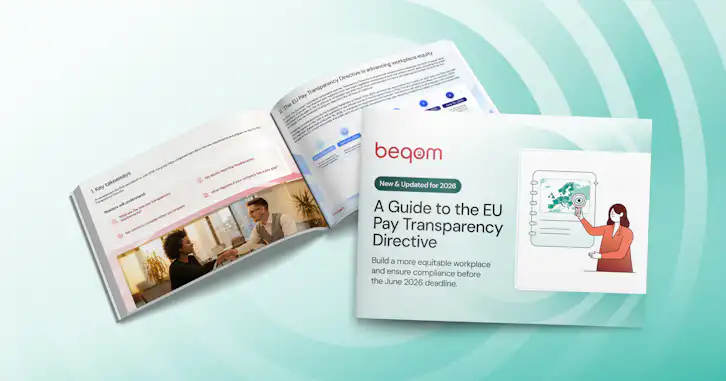
Starting June 2026, organizations across the EU must comply with sweeping new pay transparency and equity regulations. Our new and updated eGuide gives you the clarity, strategies, and tools you need to act now—before it’s too late.

The June 2026 transposition deadline has now passed. We’ve put together a 6-Point Readiness Checklist to help you ensure every aspect of the legislation is covered. Now’s the time to secure your organization against important fines, costly litigation, and reputational damage.
Each guide, article or webinar is designed to help you navigate common pain points and complex compliance challenges with confidence. Learn from beqom’s thought leaders who distill complex topics into accessible, actionable recommendations. We provide proven frameworks and real-world examples, keeping you up to date with the latest legislation and helping you stay compliant while driving employee engagement.
Il termine per la Direttiva UE sulla trasparenza retributiva è scaduto. Scopri a che punto si trova la tua azienda e cosa correggere subito.

Anche se la scadenza di giugno 2026 per la trasparenza retributiva UE si sta avvicinando rapidamente, diversi Paesi membri hanno confermato ritardi nel suo recepimento. Segui questa sessione con gli esperti di beqom ed Erste Group per scoprire perché attendere non è un'opzione e come preparare proattivamente la strategia di compliance della tua organizzazione oggi stesso.

L’attuale obbligo di comunicazione del pay gap in Francia è stato introdotto nel 2018 e implementato gradualmente. Il report richiesto (l’*Index de l’égalité professionnelle femmes-hommes*) è noto in inglese come “gender equality index”.

Scarica l'eGuide. Crea un ambiente di lavoro equo e prepara la tua azienda alla normativa UE sulla trasparenza e sull'equità retributiva.

Leggi il Report europeo 2026 sulle Retribuzioni e sulla Cultura Aziendale di beqom per scoprire come le principali organizzazioni europee stanno sfruttando le nuove direttive per modernizzare la compensation, integrare l'AI e gestire la complessità globale.

Guarda il webinar esclusivo di beqom e Allshares per approfondire la preparazione dei dati dell'ultimo miglio e i passaggi strategici per garantire la conformità alla Direttiva UE entro il 2026.