
Estonia
Estonia has partially implemented the EU Pay Transparency Directive under a unique split strategy.
95% of HR and comp leaders believe comp dollars could be better spent. Get the Pay Intelligence Report.
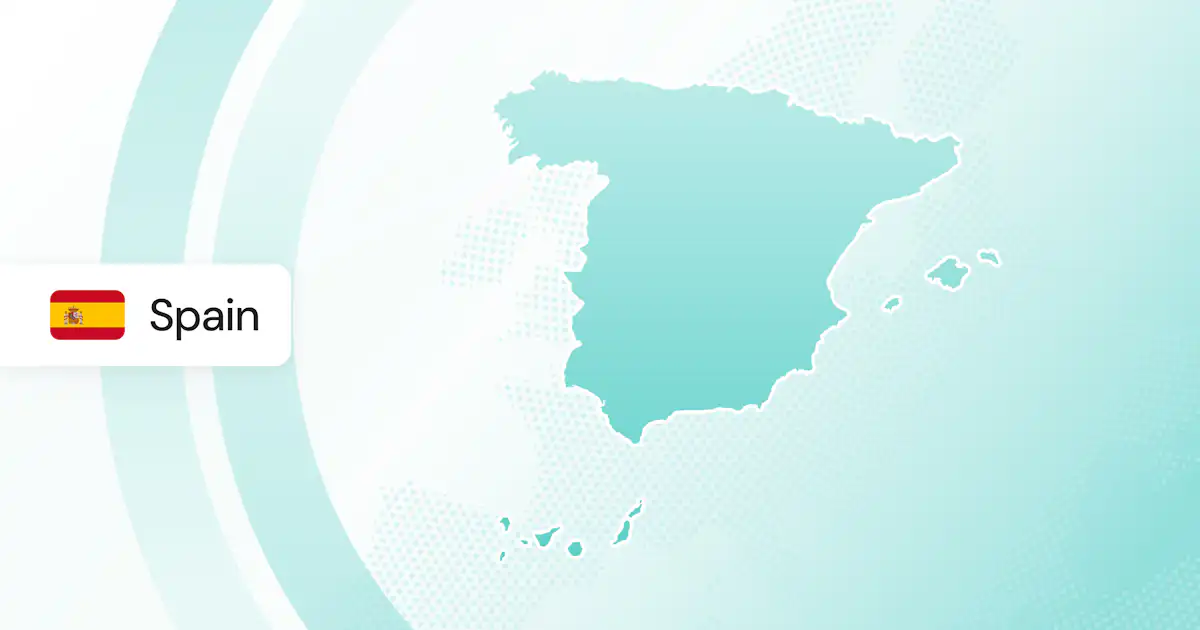
Spain missed the June 2026 transposition deadline, but on November 17th, 2026 it adopted Royal Decree-Law 39/2026, which entered into force on November 19th. It amends Spain's Royal Decree 902/2020, which already requires companies with 50+ employees to calculate and justify gender pay gaps. Much like France, Spain keeps this 50-employee threshold for reporting, which is lower than the EUPTD requires.
Transposition

The law became effective on November 19th, 2026. The first reports are due before June 8th, 2027 for employers with 150+ employees and before June 8th, 2031 for employers with 50-149 employees.

Companies with 50 or more employees must report pay gaps every three years (this exceeds the Directive’s minimum requirements, which require reporting only for companies with 100+); those with 250 or more employees report annually.

Job offers must include the initial pay and the applicable collective agreement, and employers cannot ask candidates about their pay history. Job ads and titles must be gender-neutral.

The law defines work of equal value using objective factors: the nature of the tasks, required education and training, performance-related factors and working conditions. The Ministry of Labour and the Women’s Institute will update their existing job evaluation tools for employers’ use.

Employees have the right to request written information about their pay and the pay of other workers who perform the same job or a job of equal value. They are allowed to do this once per year or when some change justifies it. The employer must respond within two months, and has 15 days to respond to clarification requests. They must also inform employees of this right at least once per year.

Spain has an existing pay register system, which individuals can access through their employee representatives or, if no such representatives exist, directly. Under the proposed legislation, when an employee requests access to the register directly, information will be limited to the percentage differences in average pay by gender.

Under existing law, employers with 50+ employees are already obliged to complete periodic pay audits. Pay audits now cover the key points of a joint pay assessment. They must analyze gender-based pay discrepancies and include an action plan, and unjustified gaps must be corrected within six months. There is no separate 5% trigger for a joint pay assessment, but employers with 100+ employees must justify gaps of 5% or more in their pay register.
Legal Interpretation
While many aspects of Spain’s draft legislation track the EUPTD norms, there are several notable exceptions to this, including:
Spain’s new rules require organizations to analyze their pay structures through a pay audit, report pay gap data to a new public commission, and correct unjustified gaps within six months. With the first reports due by June 7th, 2027, there is less than seven months to prepare.
This is what beqom’s Pay Equity and Transparency tool was built for. It combines a user-friendly interface with industry-leading, researcher-developed analytical capabilities. Our dashboard allows you to drill down into your data, locate the source of any pay gap, and calculate how to remediate it within the six-month window.
To see how our pay equity and transparency tool can give you the insight you need, schedule a demo with one of our experts.
Activity by member state
EU member states are working to transpose the EU Pay Transparency Directive into national law. We’ve created this page to keep track of each member state’s progress.
National implementation
Each EU member state is putting the EU Pay Transparency Directive into its own national law, and the details vary from country to country. Pick a country to see where its legislation stands, what employers will need to do and when the new rules take effect.
Estonia has partially implemented the EU Pay Transparency Directive under a unique split strategy.

Although France did not meet the June 2026 transposition deadline, a draft bill was presented to the Council of Ministers on September 10th, 2026 and is moving through Parliament.

Greece's transposition took effect July 6, 2026, with several key requirements deferred until November 1, 2026 to ease the transition. The framework follows the EUPTD baseline and includes added safeguards against abusive right-to-information requests.

Italy transposed the EUPTD through Legislative Decree No. 96/2026, effective June 7, 2026.

To implement the EU Pay Transparency Directive, Lithuania passed Law No. XV-969 to expand the nation’s Labour Code. The law sets up a series of sequential deadlines that cover all the elements of the Directive.

Malta transposed the EUPTD via the Equal Pay (Transparency and Reporting) Regulations 2026 (Legal Notice 173 of 2026). It largely mirrors the EU baseline, but adds stricter documentation thresholds, a short deadline for right-to-information requests, and clearly defined penalties for noncompliance.

Dutch transposition is still in draft. A first version circulated in March 2025, but the coalition government's collapse delayed progress; the current draft, dated January 20, 2026, amends the Equal Treatment of Men and Women Act of 1980.

Slovakia has fully transposed the EUPTD through its Equal Pay Act (Act No. 76/2026 Coll.). The law follows the EU baseline closely, though some deadlines are tight — offset by provisions that ease compliance for smaller businesses.
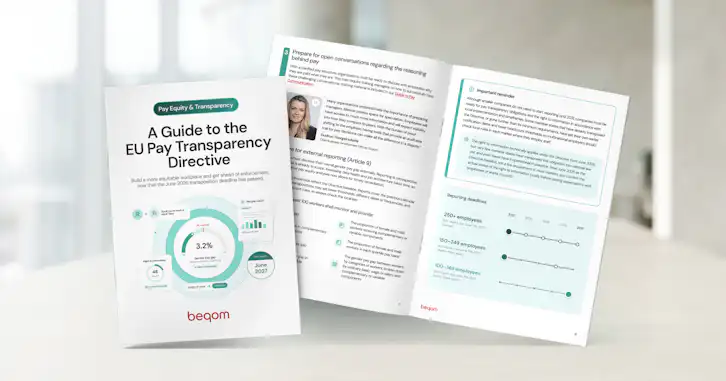
Starting June 2026, organizations across the EU must comply with sweeping new pay transparency and equity regulations. Our new and updated eGuide gives you the clarity, strategies, and tools you need to act now—before it’s too late.

The June 2026 transposition deadline has now passed. We’ve put together a 43-step Compliance Checklist to help you ensure every aspect of the legislation is covered. Now’s the time to secure your organization against important fines, costly litigation, and reputational damage.
Each guide, article or webinar is designed to help you navigate common pain points and complex compliance challenges with confidence. Learn from beqom’s thought leaders who distill complex topics into accessible, actionable recommendations. We provide proven frameworks and real-world examples, keeping you up to date with the latest legislation and helping you stay compliant while driving employee engagement.

Download the eGuide. Start building an equitable workplace and prepare your company for EU legislation on pay transparency and equity.

Gudrun Thorgeirsdottir and Rachel Gibbs get together for a practical session on building a compliant, audit-ready pay transparency strategy, even without a dedicated team or full job classification.

Europe's pay transparency landscape is still shifting post-deadline. Watch our recent webinar with beqom experts Lara Winzen and Hayley Bakker, and Max Oranski from TUI, for a candid look at what's changed, where member states stand, and what it means for employers on the ground.

The EU Pay Transparency Directive deadline has passed. Find out where your organization stands, and what to fix now.

The EU Pay Transparency Directive deadline has passed. Watch beqom and Mercer unpack what's happening across Europe, and what employers should do next.

Watch this expert session with beqom and Erste Group to discover why waiting for country transposition updates isn't an option, and how to proactively prepare your organization's compliance strategy today.