
Estonia
Estonia has partially implemented the EU Pay Transparency Directive under a unique split strategy.
95% of HR and comp leaders believe comp dollars could be better spent. Get the Pay Intelligence Report.
We’ve created this space to help you stay on top of all EU Pay Transparency Directive updates. Track member state transposition, explore country-specific guidance, and discover our latest webinars and eGuides. Use these insights to master your compliance obligations—from salary band disclosure to mandatory gender pay gap reporting.
Transposition tracker
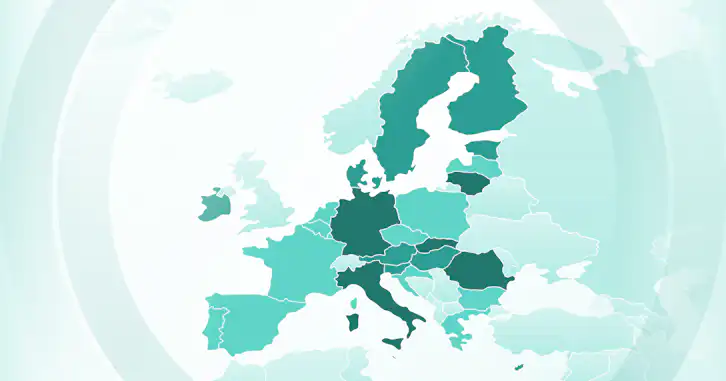
Every EU member state has to turn the Pay Transparency Directive into national law. Explore the map to see how far each country has come, or let it walk you through them one by one.
Last updated: November 9, 2026
There is no known transposition activity in Austria yet. Existing law already requires employers with more than 150 employees to provide a pay report.
Each EU member state is putting the EU Pay Transparency Directive into its own national law, and the details vary from country to country. Pick a country to see where its legislation stands, what employers will need to do and when the new rules take effect.
Estonia has partially implemented the EU Pay Transparency Directive under a unique split strategy.

Greece's transposition took effect July 6, 2026, with several key requirements deferred until November 1, 2026 to ease the transition. The framework follows the EUPTD baseline and includes added safeguards against abusive right-to-information requests.

Italy transposed the EUPTD through Legislative Decree No. 96/2026, effective June 7, 2026.

To implement the EU Pay Transparency Directive, Lithuania passed Law No. XV-969 to expand the nation’s Labour Code. The law sets up a series of sequential deadlines that cover all the elements of the Directive.

Malta transposed the EUPTD via the Equal Pay (Transparency and Reporting) Regulations 2026 (Legal Notice 173 of 2026). It largely mirrors the EU baseline, but adds stricter documentation thresholds, a short deadline for right-to-information requests, and clearly defined penalties for noncompliance.

Dutch transposition is still in draft. A first version circulated in March 2025, but the coalition government's collapse delayed progress; the current draft, dated January 20, 2026, amends the Equal Treatment of Men and Women Act of 1980.

Slovakia has fully transposed the EUPTD through its Equal Pay Act (Act No. 76/2026 Coll.). The law follows the EU baseline closely, though some deadlines are tight — offset by provisions that ease compliance for smaller businesses.
Discover how beqom PaySuite empowers your team to analyze pay gaps, ensure pay equity, and manage EU Pay Transparency Directive reporting with confidence.
Activity by member state
EU member states are working to transpose the EU Pay Transparency Directive into national law. We’ve created this page to keep track of each member state’s progress.
Check out our curated selection of expert eGuides and webinars to help you understand the Directive's impact, prepare your organization, and build a compliance strategy.


The transposition deadline has passed. Reporting obligations on pay ranges, salary history, and employee pay requests are already in force across the EU. The planning phase is over — this is the audit phase.


The EU Pay Transparency Directive's transposition deadline passed on 7th June — but the picture across Europe is far from uniform. Only a handful of member states have fully transposed, while many have announced delays, and others have barely started.

While some organizations use transposition delays as a reason to pause, others are pushing ahead. Lara Winzen (beqom) and Kerstin Willer (Erste Group) break down where member states stand, the risks of waiting, and how Erste Group reduced pay gaps at scale.

Gudrun Thorgeirsdottir (beqom) and Alexander Jarmdahl (Allshares) share what effective preparation really looks like, and the practical steps organizations are taking to get their data, plans, and teams ready for compliance.

Revisit Gudrun Thorgeirsdottir's expert session at UNLEASH World, where she explains how leading organizations are turning pay transparency into an opportunity by going beyond compliance.

Hayley Bakker and Sóley Olafsdottir break down the foundational data you need and share practical tips for your first steps toward pay equity and transparency.

beqom's pay equity experts Gudrun Thorgeirsdottir and Hayley Bakker explain what the EU Pay Transparency Directive means for organizations and share expert tips for building your compliance strategy.

The Directive isn’t just a legal change—it’s a catalyst for meaningful equity. Our new and updated eGuide gives you the clarity, strategies, and tools you need to act now.
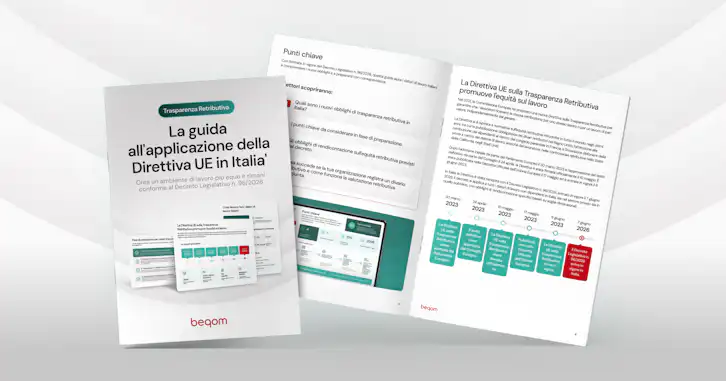
Our 2026 eGuide, now available in Italian. Get the clarity, strategies, and tools you need to build a fair workplace and meet the Directive's requirements.


See exactly where each EU member state stands on transposing the Directive into national law, from finalized legislation to drafts still working their way through parliament.
Waiting for local legislation before acting? Here's why that strategy could cost your organization more than compliance.

Article 7 gives employees the right to request information about their pay, and how it compares to others in similar roles. Here's how to design a request process that supports transparency and builds trust.

Best practices for meaningful conversations about pay, how to set your managers and HRBPs up for success, and the role of worker councils and employee representatives.

Our guide to defining worker categories helps you build objective, unbiased, and defensible pay structures that stand up to the Directive's requirements.

Struggling to define categories of workers for pay transparency reporting? Here's how CLAs, local law, and job architecture fit together.

Discover how beqom helps HR teams and workers' councils run objective joint pay assessments, close gender pay gaps, and comply with the EU Directive.

There's more than one type of pay gap. Learn the difference between adjusted and unadjusted pay gaps, and what reporting the EU Directive requires.

